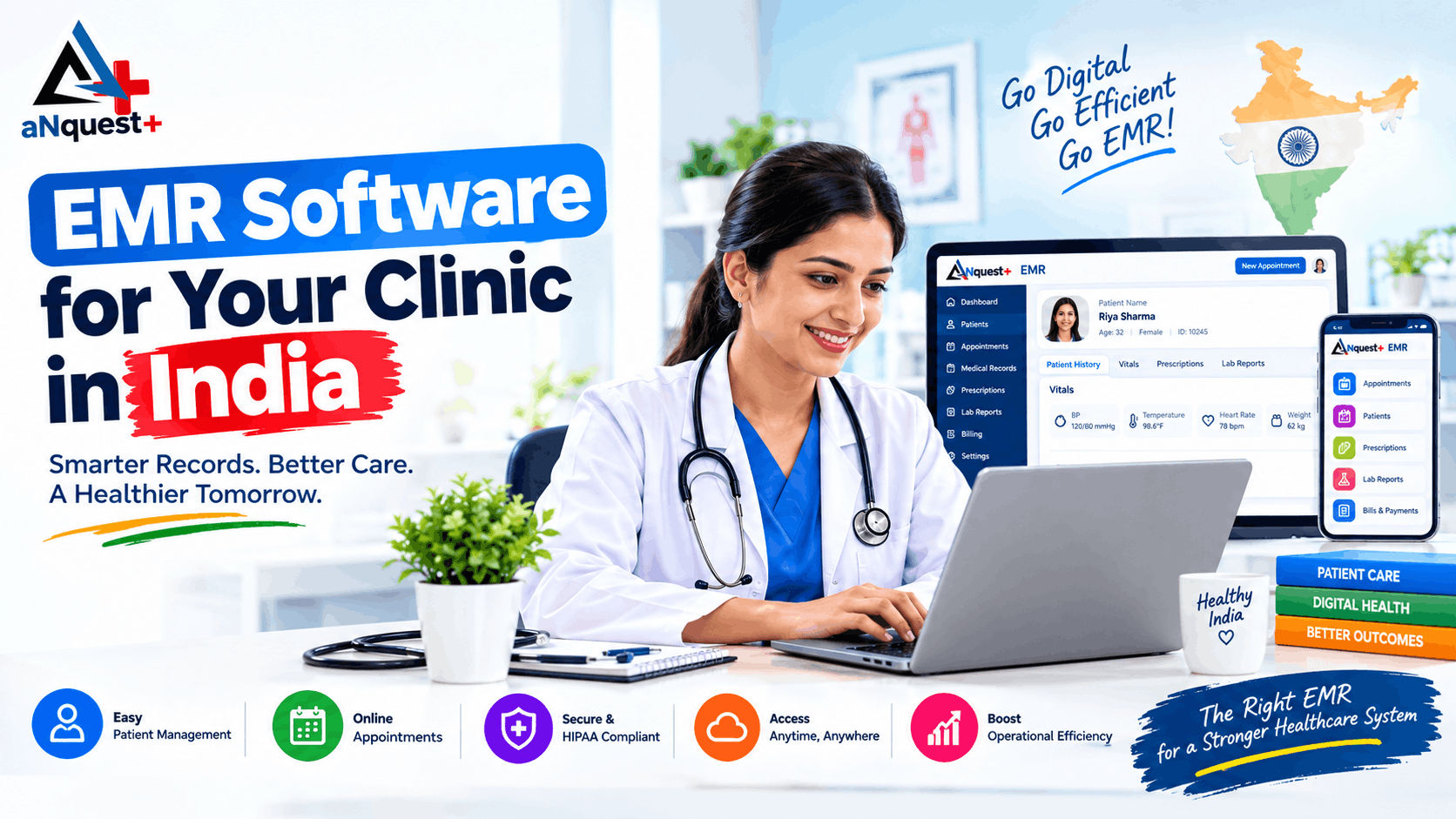



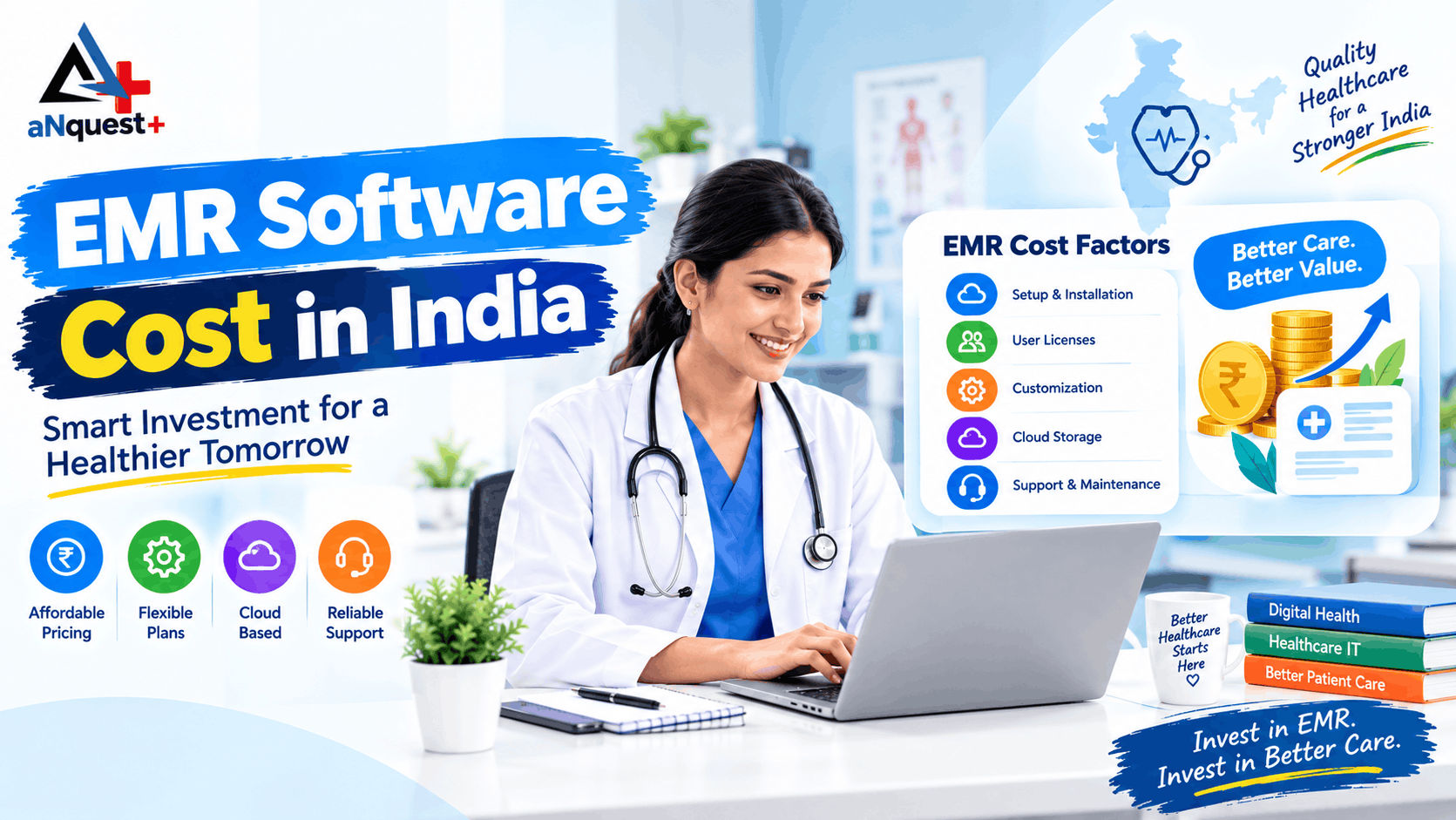
Published prices for a single clinic in India run from roughly ₹5,000 to ₹17,000 a year, plus 18% GST, depending on plan and features. Hospital systems are usually quoted individually; one vendor guide puts them at ₹75,000 to over ₹3,00,000 a year. Implementation, training and add-on modules can raise the total.
There is no single price, because EMR software is sold in very different ways. This guide shows the ranges clinics actually see, what pushes a quote up, which costs are easy to miss, and a worked first-year budget. All prices were checked on 17 October 2026 from each vendor's own page and are shown without GST unless stated, so confirm current rates before you decide.
How much does EMR software cost in India?
For one clinic, expect a yearly subscription in the ₹5,000 to ₹17,000 range, plus 18% GST. That usually covers records, prescriptions and appointments for one doctor. Hospitals and nursing homes with IPD, lab and pharmacy needs are normally priced by quote, because the scope varies too much for a fixed list.
Treat every number below as a vendor-reported price, not a market average. Each source sells its own product, and plans change.
EMR software price ranges at a glance
|
Category |
Typical annual cost |
What is usually included |
Source (checked 17 Oct 2026) |
|---|---|---|---|
|
Free or very basic tools |
₹0 |
Basic records only; billing and teleconsultation often missing |
|
|
Entry-level clinic platforms |
₹5,000 to ₹12,000 |
Limited EMR |
PRED Solutions guide (vendors not named) |
|
DoctorsApp Silver |
₹10,999 per year, 1 doctor, 2 staff logins |
Appointments, digital prescriptions, lab reports, analytics, cloud backup |
|
|
DoctorsApp Gold |
₹16,999 per year, 1 doctor, 3 staff logins |
Silver features plus more WhatsApp credits and extras |
DoctorsApp pricing page |
|
PRED Care |
₹15,000 per year |
EMR, billing and telemedicine bundled |
PRED Solutions guide |
|
Hospital-grade systems |
₹75,000 to ₹3,00,000+ per year |
EMR with hospital information system, lab and pharmacy |
PRED Solutions guide (self-reported range) |
|
Nursing homes and hospitals |
Quoted individually |
Depends on beds, departments and modules |
DoctorsApp pricing page ("contact us") |
Two cautions. First, the DoctorsApp and PRED prices exclude 18% GST. Second, some modules, such as lab and pharmacy, are listed "as per need" with no price, so the headline plan is rarely the full cost.
How is EMR software priced?
Ask a vendor which of these models they use, because the same software can cost very different amounts under each.
- Per-doctor subscription. You pay yearly for each doctor. This is the most common model for clinics, and it gets expensive as you add doctors.
- Per-clinic subscription. One yearly fee covers a clinic, often with a limit on doctors or staff logins.
- Per-bed or per-department pricing. Common for nursing homes and hospitals, where the fee grows with size.
- One-time licence. A larger payment up front, sometimes with a yearly fee for support and updates. Vendors describe this as cheaper over the long run for larger practices that don't need frequent updates.
- Free tier. No fee, but with limits on features, storage or support.
What affects the cost of EMR software?
Most of the difference between a cheap quote and an expensive one comes from a few things:
- Number of doctors and staff users. Each extra login can change the price.
- Modules. Appointments and prescriptions are usually basic. Lab, pharmacy, IPD and billing often cost more.
- Communication credits. WhatsApp and SMS reminders may come as a limited allowance, with extra credits charged. DoctorsApp's cheaper plan, for example, lists WhatsApp credits as limited.
- Specialty templates. Some plans include specialty modules such as ophthalmology or paediatrics. Others charge separately.
- Integrations. Connecting your own lab, pharmacy or your own WhatsApp number may be priced "as per need".
- Hosting and security. Cloud plans fold hosting into the yearly fee. Systems on your own servers add hardware and maintenance.
- Compliance support. Ask whether ABDM features are included or billed separately (see the ABDM question below).
What hidden costs should you budget for?
A quote for the software is only part of the money you will spend. Before you compare prices, add these to the list:
- GST at 18% on the plan, which turns ₹10,999 into about ₹12,979.
- Data migration. Moving paper files, registers or an older system's data. Some vendors include help with this and some charge for it, so ask for it in writing.
- Training. Staff need time and sometimes paid sessions to use the system properly.
- Hardware. Tablets, a computer for the front desk, a printer, a stable internet connection.
- Add-on modules. Lab, pharmacy and IPD often sit outside the base plan.
- Message credits. Extra WhatsApp or SMS once the included allowance runs out.
- Customisation. Changes to templates, reports or workflows can carry extra fees.
- Support tiers and renewals. Check what basic support covers and whether the price rises at renewal.
None of these is a reason to avoid EMR software. They are the reason to ask for the full first-year cost, not only the plan price.
Is free EMR software really free?
Sometimes, for basic use. A free tool can be enough to try the idea of digital records for a solo doctor. The questions are about what you give up:
- Can you export all your patient data if you leave?
- Does it include billing and prescriptions, or only notes?
- Is there limited storage or a cap on patients?
- Who supports you when something breaks?
- Does it send reminders, and are they limited?
If the answers are unclear, a low-cost paid plan may serve you better than a free one that you outgrow in a few months.
Example: first-year budget for a 2-doctor clinic
This is an illustration, not a quote. It uses one vendor's published plan prices (DoctorsApp, checked 17 October 2026). Each plan lists one doctor, so a second doctor probably needs a second plan. Confirm this with any vendor.
|
Item |
Silver plan |
Gold plan |
|---|---|---|
|
Plan price per doctor |
₹10,999 |
₹16,999 |
|
Two doctors |
₹21,998 |
₹33,998 |
|
Plus 18% GST |
₹25,958 |
₹40,118 |
|
Year 3 total (same price, no increase) |
₹77,873 |
₹1,20,353 |
Those figures still leave out hardware, training, add-on modules, extra message credits and any migration fee. Ask each vendor to price those lines in writing, then compare total cost over three years, not only the first-year plan.
Should you buy or build your own EMR?
For almost every clinic, buying a ready system is the practical route. Building custom software is a separate project with its own budget, timeline and maintenance burden, and it only makes sense for large groups with unusual workflows. This guide covers the price of buying a system.
How does aNquest+ price its EMR?
The aNquest+ EMR is quoted to fit your setup, not sold from a fixed price list. Typical factors are the number of doctors and staff users, which of the 50+ clinical modules you need, how much patient data you want migrated, and which integrations (WhatsApp, telephony, SMS, diagnostics, pharmacy) you want connected.
To get a price for your clinic or hospital, request a quote with your doctor count and the modules you need. You can also contact the team directly, or see the wider range on the aNquest+ services page.
What should you ask before you sign?
Use these questions to compare quotes on equal terms:
- What is the total first-year cost, including GST, setup and migration?
- What will the price be at renewal in year two and year three?
- How many doctors and staff logins does the plan include?
- Which modules are included, and which are charged separately?
- Is data migration included, and who checks it?
- Is training included, and for how many people?
- Can I export all my data if I leave?
- What is integrated with ABDM today, and is it included in the price?
If you are still choosing a system, our EMR software buying guide for India covers what to compare beyond price.
Frequently asked questions
What is the average cost of EMR software in India?
For a single clinic, published yearly prices fall roughly between ₹5,000 and ₹17,000 plus GST. Hospital systems are usually quoted individually and can be far higher.
What factors influence EMR software pricing?
The number of doctors and staff users, the modules you choose, message credits, integrations, specialty templates and whether hosting is included.
Are there hidden costs with EMR software?
Often, yes. Look for GST, data migration, training, hardware, add-on modules, extra message credits, customisation fees and renewal increases.
Is there a one-time payment option for EMR software?
Some vendors offer a one-time licence, usually with a larger payment up front and a yearly fee for support and updates. Many clinic products are yearly subscriptions instead.
Are there free EMR options in India?
Yes, basic tools exist. They usually have limits on features, storage or support, so check data export and billing before relying on one.
Is EMR mandatory in India?
Not universally. The Ayushman Bharat Digital Mission (ABDM) is building standards for digital health records, and rules for specific facilities can change, so check current guidance for your type of facility.
How does cloud EMR pricing compare with on-premise?
Cloud plans usually charge a yearly fee that includes hosting and backups. On-premise systems often cost more up front and add server, hardware and maintenance costs.
Conclusion
EMR software cost in India depends less on the headline price and more on how many doctors you have, which modules you need and what the vendor leaves out of the quote. For a single clinic, plan on roughly ₹5,000 to ₹17,000 a year plus GST for the software, then add migration, training and hardware. Hospitals should expect a custom quote.
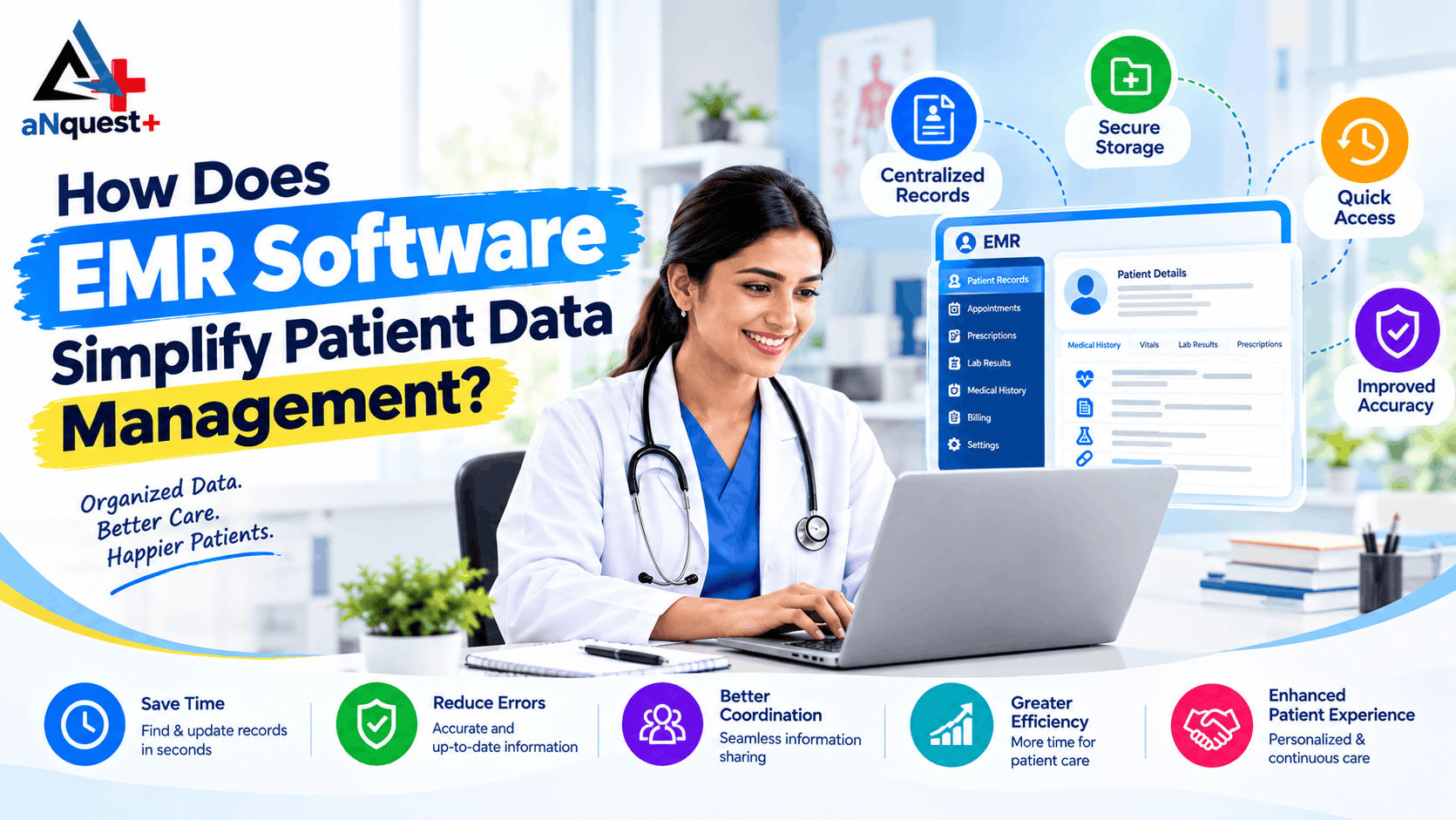
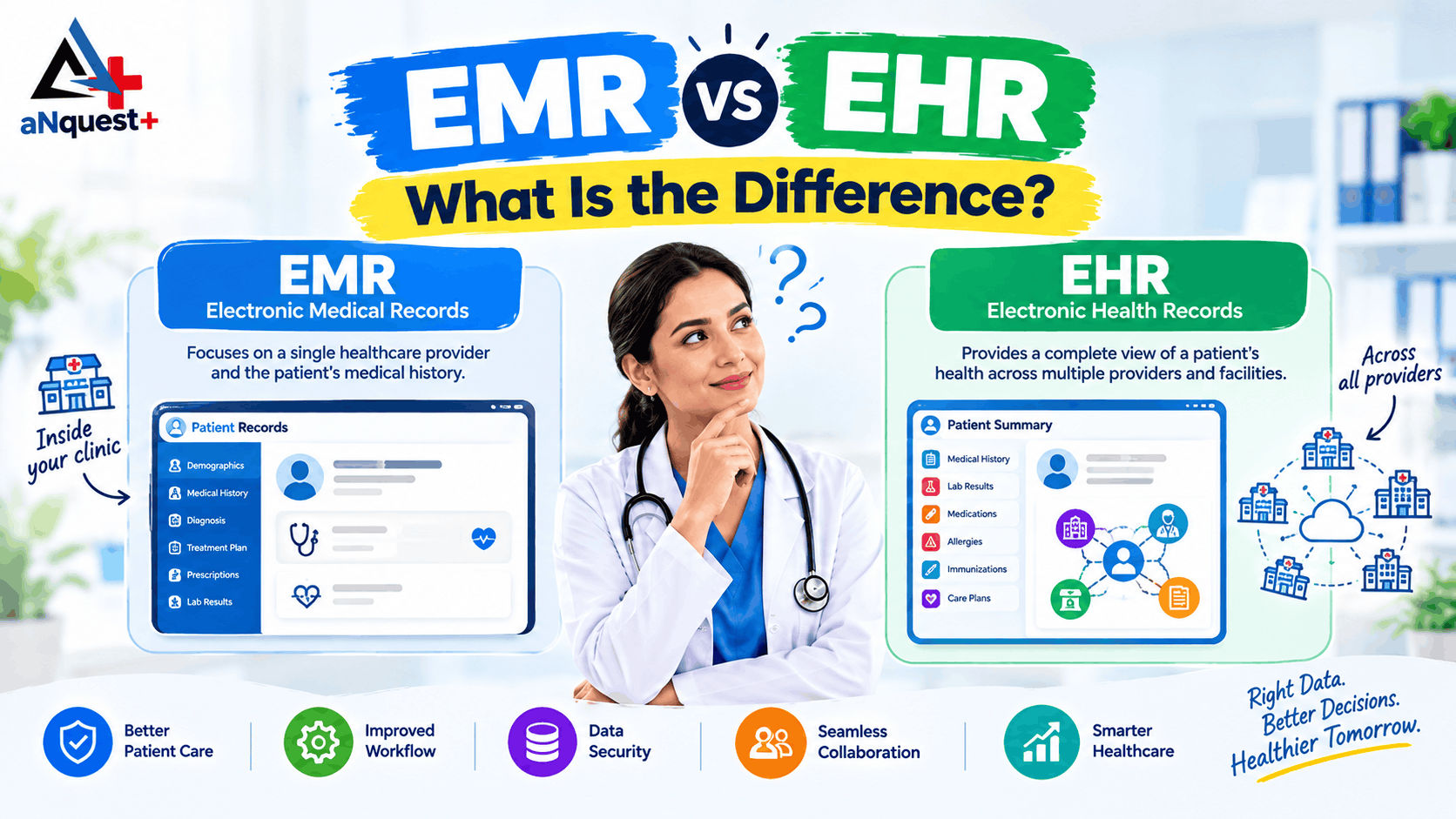
If you want a price built around your own setup, request a quote from aNquest+. To understand what the software does before you budget, read how EMR software simplifies patient data management, the difference between EMR and EHR, or how to manage patient records without hiring more staff.