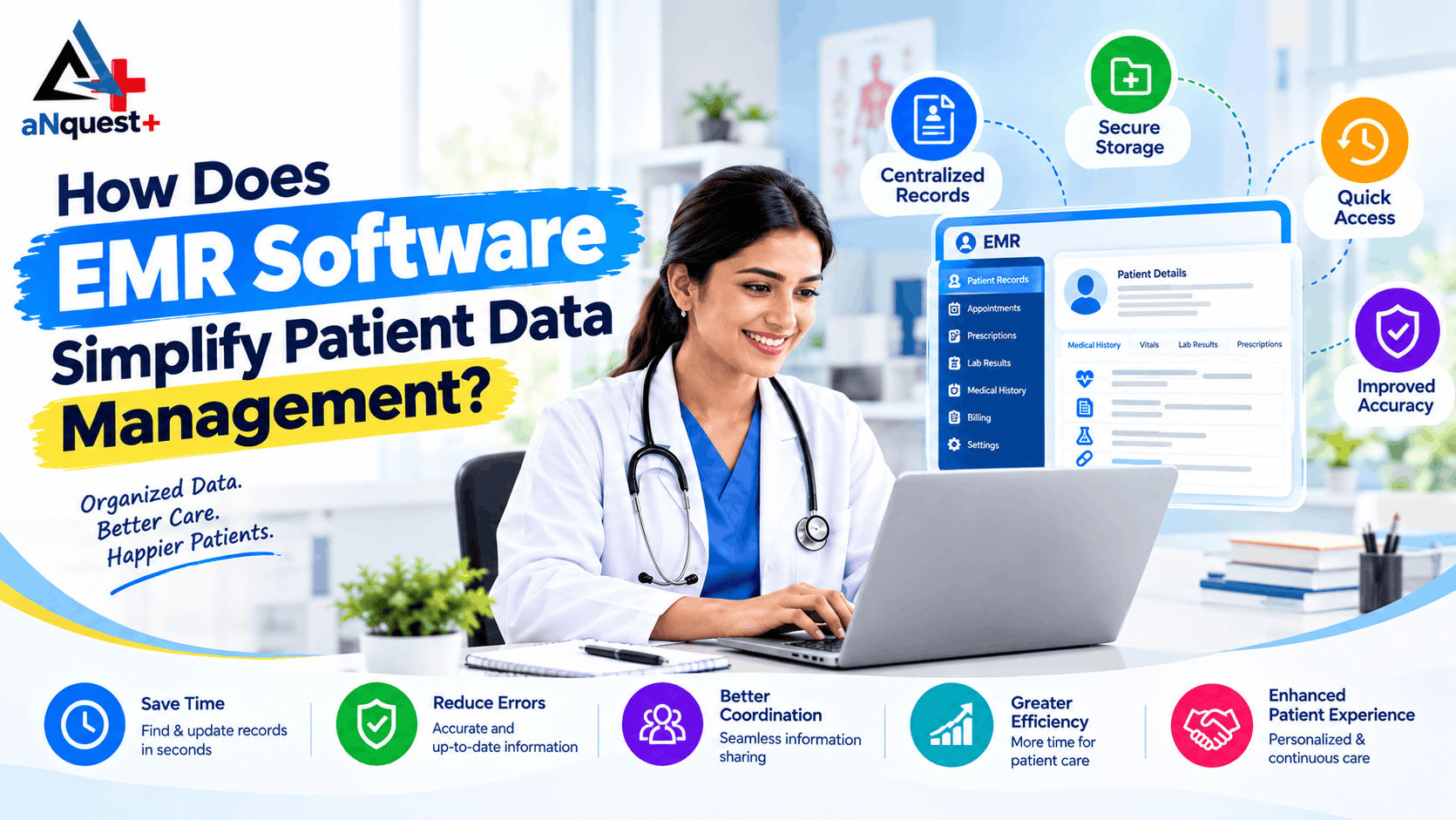



Most EMR buying guides you'll find online walk you through the same four steps — needs assessment, vendor selection, data migration, staff training — regardless of what kind of clinic you run. That's not wrong, exactly. It's just generic enough to apply to almost any software purchase, which means it doesn't actually help you make the decision in front of you.
Here's a more useful starting point: seven things that actually differ between EMR vendors in India, and where clinics most often get burned when they skip them.
EMR vs EHR — Which Do You Actually Need?
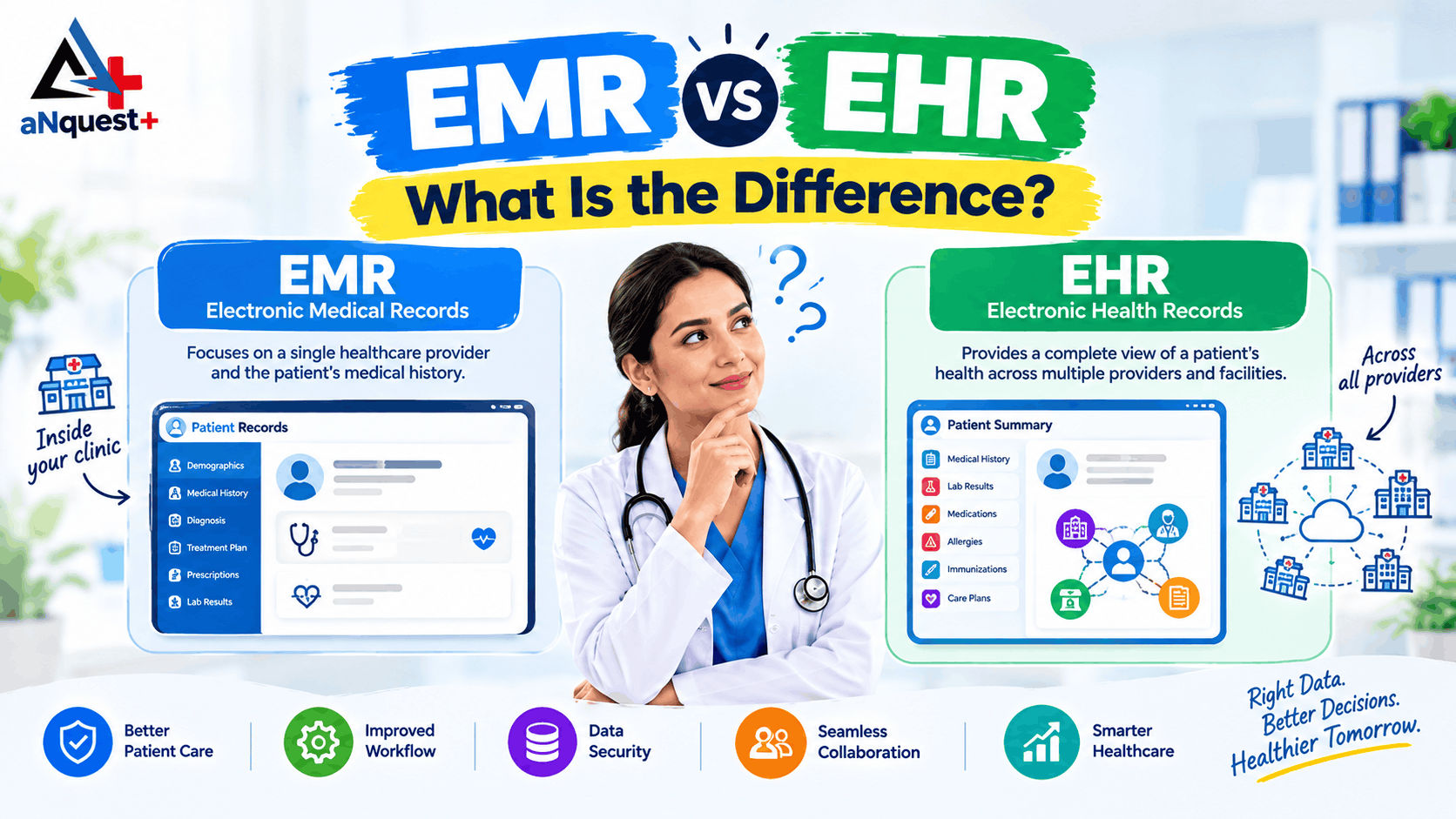
Get this distinction right before you evaluate a single vendor, because it changes your entire shortlist. An EMR (Electronic Medical Record) is built around a single practice — it digitizes the patient chart that used to live in a manila folder at your front desk. An EHR (Electronic Health Record) is a broader, more expensive system designed to share records across multiple providers and institutions.
For an independent doctor, a specialist clinic, or a small hospital, EMR is almost always the right category. EHR-scale systems are built for large hospital chains and government health networks — buying one for a single-location clinic means paying for interoperability infrastructure you don't need yet.
7 Criteria to Evaluate Before You Buy
1. Vendor experience with Indian healthcare specifically. A system built primarily for the US or European market will assume patient behaviors that don't hold here — SMS-based reminders instead of WhatsApp, English-only interfaces, billing formats that don't match GST requirements. Ask any shortlisted vendor how many Indian clinics they currently serve, not just how many customers globally.
2. Patient communication channel. Check whether the system's reminder and intake automation runs through WhatsApp or defaults to SMS/email. This sounds minor until you see the difference in actual response rates — a reminder in an app patients already check daily behaves very differently from one that lands as an easily-ignored text.
3. ABDM/ABHA readiness. This is the criterion almost no buying guide currently mentions, and it's becoming one of the most important. India's Ayushman Bharat Digital Mission is building a national digital health infrastructure that links patient records across providers via ABHA IDs — over 1.3 lakh facilities are already ABDM-enabled, including more than 17,000 private facilities. An EMR that isn't built with ABDM compatibility in mind may need a costly overhaul later as this infrastructure becomes more central to how Indian healthcare data moves.
4. Data security and DPDP Act compliance. Your EMR vendor is processing personal health data, which makes consent handling and data storage practices a direct compliance question under India's Digital Personal Data Protection Act, 2023 — not just a vague "we take security seriously" claim in a sales deck. Ask specifically how consent is captured and how patients can request their data be deleted.
5. Total cost of ownership, not just the sticker price. Software subscription is one line item. Hardware upgrades, staff training time, and data migration from your current paper or spreadsheet system all add up — and vendors rarely volunteer the full number upfront. Ask for a complete cost breakdown, not just the monthly plan price.
6. Support responsiveness. A clinic can't afford a support ticket that sits unanswered for three days when the scheduling system goes down mid-morning. Ask what the actual support SLA is, and ideally talk to an existing customer about how support has performed in practice.
7. Specialty-specific customization. A gastroenterology clinic, a dermatology practice, and a diagnostic lab all need different fields, templates, and workflows. A generic system that treats every specialty identically will cost you time later in manual workarounds.
What EMR Software Costs in India
Pricing varies significantly by vendor, clinic size, and feature set, so treat any number you see online — including this one — as a starting point for a conversation, not a quote. As a general shape: a single-location practice typically pays a monthly subscription rather than a large upfront license, with multi-location or multi-specialty setups costing more due to added users and integrations. Get a specific, itemized quote before comparing vendors — a headline monthly figure that excludes training, migration, and add-on modules isn't a real comparison.
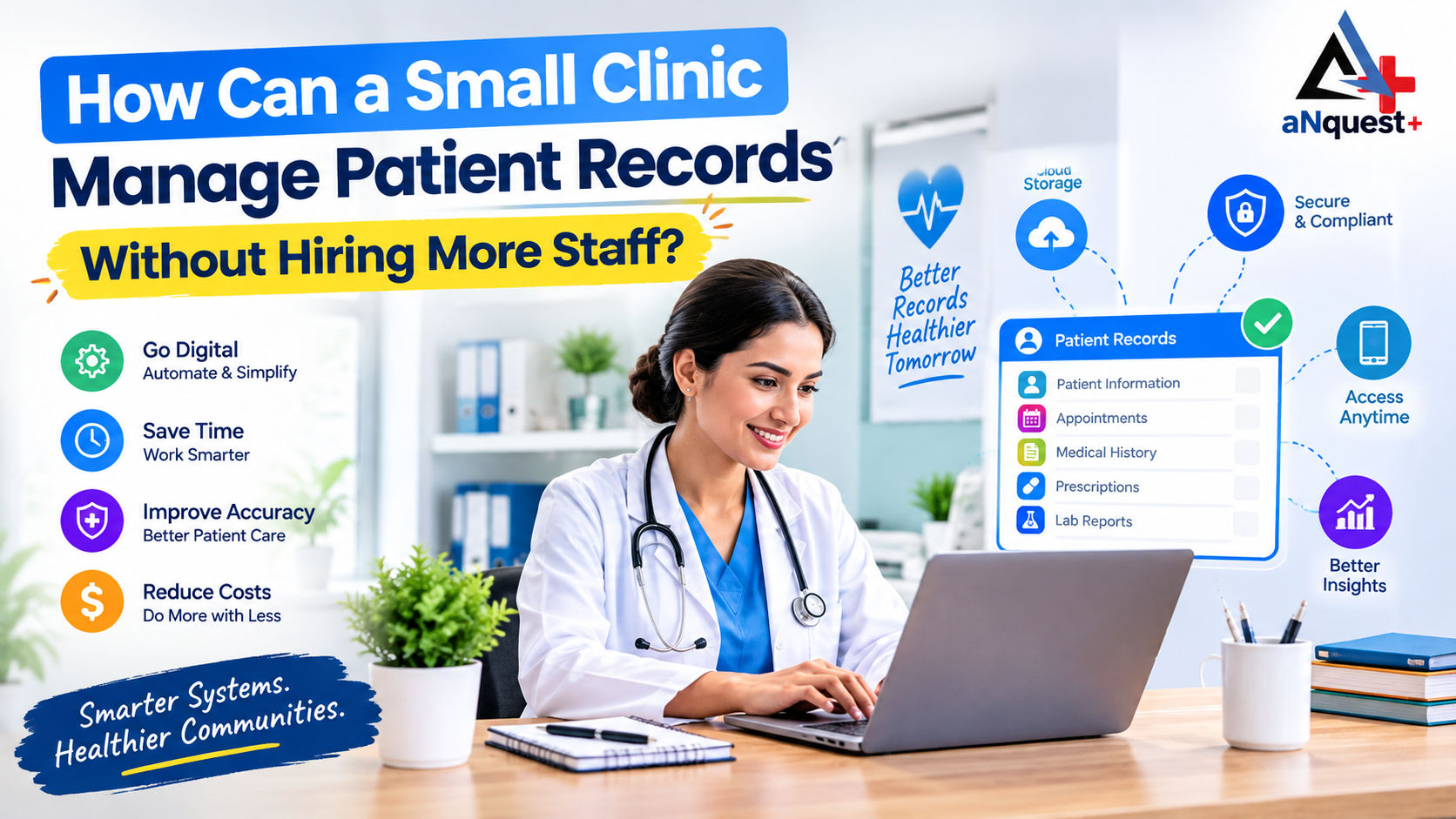
If your actual concern is handling a growing patient load without adding headcount rather than picking new software from scratch, see our guide on how a small clinic can manage patient records without hiring more staff — automation often closes that gap before a new hire does.
A Simple Evaluation Checklist
Before you sign with any vendor, confirm you have direct answers — not marketing copy — to each of these:
- How many Indian clinics does this vendor currently support?
- Does patient communication run through WhatsApp, or only SMS/email?
- Is the system ABDM/ABHA-compatible today, or on a roadmap with no committed date?
- How is patient consent captured and stored under DPDP Act requirements?
- What's the full cost, including training and migration — not just the subscription line?
- What's the guaranteed support response time, in writing?
- Can the system be configured for your specific specialty without a custom development project?
Common Buying Mistakes to Avoid
- Buying on features alone, without checking compliance readiness. A feature-rich system that hasn't addressed ABDM or DPDP Act requirements will need retrofitting later — usually at a worse time and higher cost than doing it right at purchase.
- Assuming SMS automation is "good enough." It technically works. It just doesn't perform the way WhatsApp-based reminders do for most Indian patient bases.
- Skipping the data migration conversation until after signing. Ask upfront exactly how your existing records — paper or digital — will move into the new system, and who's responsible if something goes wrong during the transfer.
- Choosing based on the lowest subscription price without asking about total cost. The cheapest sticker price is rarely the cheapest total cost once training, migration, and support gaps are counted.
FAQ
What is the difference between EMR and EHR?
EMR is scoped to a single practice's patient records; EHR is a broader system designed for sharing records across multiple providers and institutions. Most independent clinics and small hospitals only need an EMR.
How much does EMR software cost in India?
It depends on clinic size, specialty, and feature set — get an itemized quote covering subscription, training, and migration rather than comparing headline monthly prices alone.
Is ABDM registration mandatory for clinics?
It isn't universally mandatory today, but adoption is accelerating quickly, and choosing ABDM-ready software now avoids a forced migration later.
Can I switch EMR vendors later without losing patient data?
Yes, if the migration is planned properly — ask any vendor you're evaluating how they handle data export in a standard format, so you're never locked in by your own patient records.
Want to see what this looks like once it's live? Here's a real example: Dr. Kailash Kumar Jha's dermatology & venereology profile in Ghaziabad, built on the aNquest+ platform.
Evaluating EMR software for your clinic? Explore aNquest+'s EMR and CRM services or request a quote to get a cost breakdown specific to your practice.